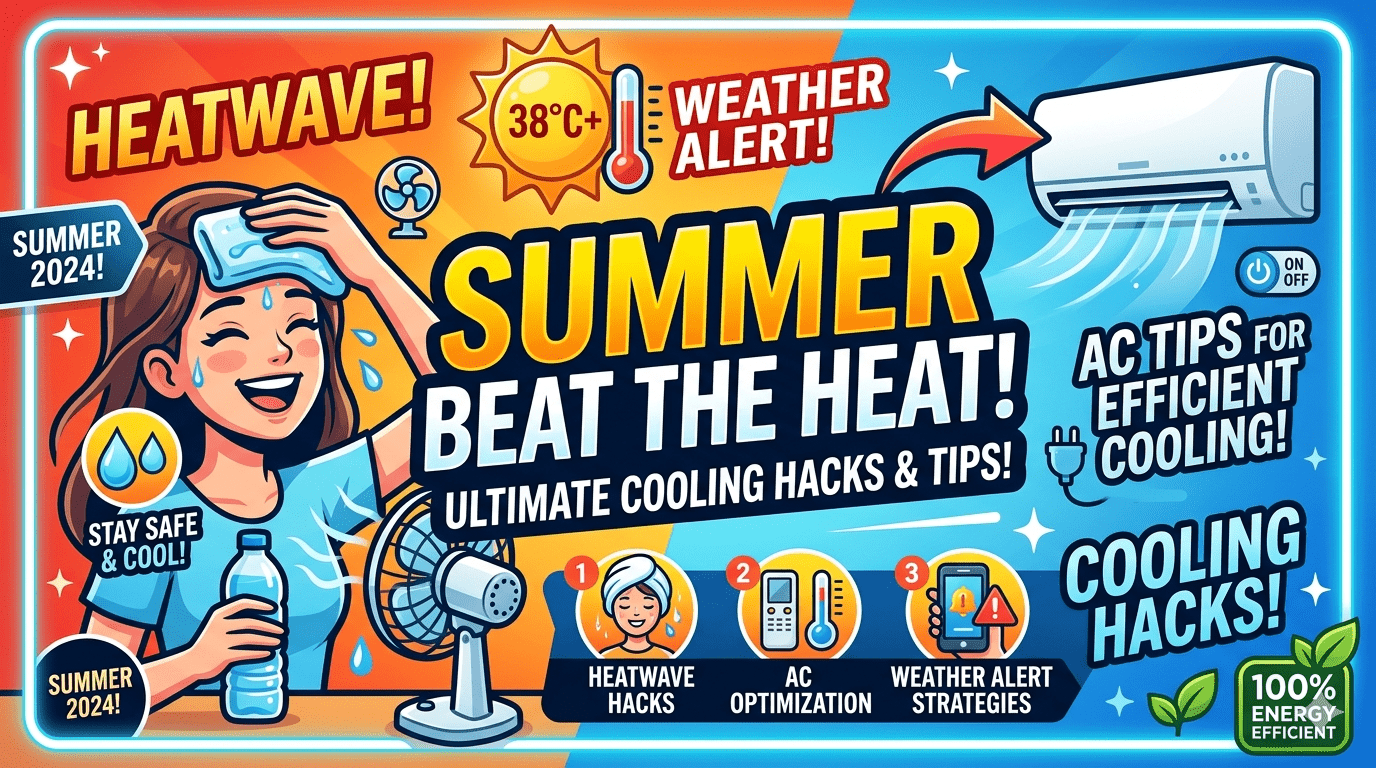
Heatwave Cooling Hacks
Heatwave Cooling Hacks That Actually Work During Extreme Summer Temperatures
Rising urban temperatures are pushing millions of people to search for effective cooling solutions during intense heatwaves.

Searches for heatwave cooling hacks, AC cooling tips, and weather alerts are exploding across Google because people are no longer dealing with ordinary summer temperatures. Cities are witnessing record-breaking heat indexes, electricity grids are under pressure, and indoor environments are becoming dangerously uncomfortable. The intense rise in temperature is not just a seasonal inconvenience anymore. It is directly impacting sleep quality, productivity, health, hydration levels, and even household electricity bills.
People are desperately searching for fast and practical ways to cool down their homes without turning their electricity meters into spinning machines. That is exactly where smart cooling strategies matter. Simple adjustments inside your room, better airflow planning, strategic AC settings, and weather alert awareness can dramatically reduce heat stress while helping you stay comfortable throughout the day.
If you have already explored guides on
summer home energy-saving tips
or checked our detailed breakdown on
smart home cooling devices,
this guide will help you connect those strategies with real-world heatwave survival methods that people are actively using right now.
Why Heatwaves Feel More Dangerous Than Before
Modern cities trap heat aggressively. Concrete roads, glass buildings, traffic pollution, and shrinking green spaces create what experts call the urban heat island effect. Temperatures in dense city areas can feel several degrees hotter compared to nearby suburban regions. That difference becomes dangerous during peak afternoon hours.
The human body struggles when humidity rises alongside temperature. Sweat stops evaporating efficiently, which means your body cannot cool itself naturally. This is why many people feel exhausted even while sitting indoors. Headaches, dizziness, dehydration, and poor concentration become common symptoms during prolonged heatwaves.
You can reduce that stress significantly by following smarter cooling methods instead of relying entirely on constant AC usage. Readers exploring our
healthy hydration routine for summer
often discover that cooling your body effectively requires a combination of temperature management and hydration balance.
Efficient air conditioner usage can reduce indoor heat stress while lowering electricity consumption.
The AC Settings That Cool Faster Without Increasing Your Electricity Bill
Most people unknowingly misuse their air conditioners. Setting the AC temperature to 16°C does not cool the room instantly. It only forces the compressor to work harder for longer periods, increasing power consumption dramatically. Experts now recommend maintaining indoor temperatures between 24°C and 26°C for efficient cooling and sustainable electricity usage.
Ceiling fans become surprisingly powerful when combined with air conditioning. Fans circulate cool air more evenly, reducing hotspots inside the room. This allows your AC to maintain stable temperatures with less compressor strain. Homes that use this combined airflow strategy often report noticeably lower energy costs during peak summer months.
Dirty air filters quietly destroy AC efficiency. Dust blocks airflow, weakens cooling performance, and forces the system to consume more electricity. Cleaning filters every two to three weeks during heavy summer usage can instantly improve airflow quality. Readers following our
complete AC maintenance guide
frequently notice stronger cooling performance within the same day after cleaning filters.
Curtains matter more than most people realize. Sunlight entering through uncovered windows can increase room temperatures rapidly. Blackout curtains or reflective blinds reduce indoor heat gain significantly during afternoon hours. Closing curtains before noon can preserve cooler indoor temperatures throughout the day.
Cooling Hacks That Work Even Without Air Conditioning
Millions of people face heatwaves without access to continuous air conditioning. Fortunately, several highly effective cooling methods can still reduce indoor temperatures naturally. Cross ventilation remains one of the most overlooked techniques. Opening windows strategically during early morning and late evening hours allows trapped hot air to escape while pulling cooler air inside.
Cotton bedsheets, breathable clothing, and lightweight fabrics can improve body cooling dramatically during sleep. Thick mattresses and synthetic bedding trap heat aggressively, making nighttime discomfort worse. Switching to natural fabrics reduces heat retention and improves airflow around the body.
Cold water foot soaks provide surprisingly fast relief because blood vessels near the feet respond quickly to lower temperatures. Many people experience instant cooling sensations after soaking their feet for just ten minutes. This method becomes especially effective before bedtime.
Indoor plants can also help regulate heat conditions modestly while improving humidity balance. Plants such as aloe vera, snake plant, and areca palm are increasingly popular among homeowners searching for passive cooling solutions. Our readers often combine these strategies with techniques from
indoor air quality improvement methods
to create more breathable living spaces during peak summer periods.
Smart room setups with breathable fabrics and controlled sunlight can improve cooling naturally.

Why Weather Alerts Should Never Be Ignored During Heatwaves
Heatwave alerts are not exaggerated warnings. They exist because prolonged exposure to high temperatures can become medically dangerous within hours. Government weather departments issue alerts based on humidity, temperature intensity, wind patterns, and expected duration of extreme heat.
Yellow alerts usually indicate rising temperatures requiring caution, while orange and red alerts signal potentially severe health risks. Outdoor workers, elderly individuals, children, and people with pre-existing medical conditions face significantly higher danger levels during red alert periods.
Staying updated through reliable weather apps and local emergency notifications can help you plan travel, outdoor activities, hydration schedules, and electricity usage more effectively. Readers frequently combine these alerts with advice from our
emergency home preparedness resource center
to stay safer during extreme weather conditions.
How Heatwaves Affect Sleep, Focus, and Mental Performance
High temperatures interfere directly with sleep cycles because the human body naturally lowers its core temperature before deep sleep begins. Overheated bedrooms interrupt this process, leading to restless sleep, repeated waking, and morning fatigue.
Poor sleep during heatwaves impacts memory, focus, emotional regulation, and workplace productivity. People often underestimate how strongly indoor temperatures affect mental performance. Even slight reductions in room temperature can improve concentration levels and reduce irritability throughout the day.
Creating a cooler nighttime environment requires consistency rather than expensive gadgets alone. Limiting heavy meals before bed, reducing screen exposure, improving ventilation, and lowering humidity can transform sleep quality dramatically during summer months.
Actionable Heatwave Survival Strategy Table
| Cooling Strategy | Primary Benefit | Best Usage Time |
|---|---|---|
| Setting AC to 24°C–26°C | Reduces electricity usage while maintaining comfort | Whole day usage |
| Closing blackout curtains | Blocks solar heat gain indoors | Before noon |
| Using fans with AC | Improves air circulation and cooling efficiency | Afternoon and evening |
| Hydration with electrolytes | Prevents heat exhaustion and fatigue | Throughout the day |
| Checking weather alerts daily | Improves heatwave preparedness and safety | Morning and evening |
Frequently Asked Questions About Heatwave Cooling Hacks
Why does my room stay hot even with the AC running?
Poor insulation, direct sunlight exposure, dirty filters, and air leaks around windows can reduce cooling efficiency significantly. Many homes lose cool air faster than the AC can replace it. Sealing gaps, using blackout curtains, and improving airflow circulation often solve this issue more effectively than lowering the thermostat excessively.
Is sleeping with the AC on all night dangerous?
Sleeping with air conditioning is generally safe when temperatures remain moderate and airflow is not directed directly at your body for extended periods. Maintaining a stable temperature around 24°C often provides better sleep quality while avoiding excessive dryness or throat irritation.
What is the fastest way to cool down after coming indoors from extreme heat?
Hydrating immediately, washing your face and wrists with cool water, removing heat-trapping clothing, and sitting in a ventilated area can reduce body temperature quickly. Sudden ice-cold exposure may shock the body, so gradual cooling methods tend to work more comfortably and effectively.
Can fans replace air conditioners during a heatwave?
Fans improve airflow and sweat evaporation, but they do not lower room temperature directly. During severe heatwaves, fans work best when combined with shaded rooms, proper hydration, and nighttime ventilation strategies. In extremely high temperatures, air conditioning provides stronger protection against heat stress.
How often should weather alerts be checked during peak summer?
Checking weather alerts at least twice daily is recommended during active heatwave periods. Morning updates help you plan daytime exposure, while evening updates prepare you for overnight heat conditions and possible power usage advisories.
Your Next Steps for Staying Safe and Comfortable This Summer
Extreme summer temperatures are no longer rare events. Heatwaves are becoming longer, harsher, and more disruptive every year. Small adjustments inside your home can make a dramatic difference in how your body responds to rising temperatures. Smarter AC usage, airflow management, hydration routines, and weather awareness together create a powerful defense against heat stress.
Start by optimizing the environment you control most — your room, your sleep quality, your cooling habits, and your hydration levels. Once you build those routines consistently, surviving even severe heatwaves becomes far more manageable and far less exhausting.
If you want deeper strategies for reducing energy bills, improving indoor comfort, and building a more heat-resistant living space, explore our expert resources on
home energy optimization
and
summer health protection strategies.